
UX Glossary
UX Glossary

UX Glossary

@uxglossary

🚨 UX Term Spotlight: Edge Case 🚨

An Edge Case refers to rare or extreme scenarios that fall outside the typical user journey—but still need thoughtful design.

Why they matter in UX:
✅ Reveal hidden design flaws
✅ Prevent user frustration & drop-offs
✅ Improve inclusivity & accessibility
✅ Build trust by handling the unexpected

Examples:
- Slow internet or unsupported browsers
- Users entering data in unusual formats
- Accessibility challenges (e.g., screen readers)
- System crashes or outages

👉 Designing for edge cases ensures your product works not just in the “happy path,” but in the real world where unpredictability happens.

Read: https://www.uxglossary.com/terms/edge-case/

#uxdesign #userexperience #uxglossary #edgecase #designthinking #accessibility #productdesign
What is Edge Case? Definition, Examples & Use Cases | UX Glossary
Favicon 
www.uxglossary.com

What is Edge Case? Definition, Examples & Use Cases | UX Glossary

Edge Case in UX refers to rare or extreme scenarios that fall outside normal user journeys. Addressing edge cases ensures designs remain resilient, inclusive, and user-friendly even under unusual conditions.

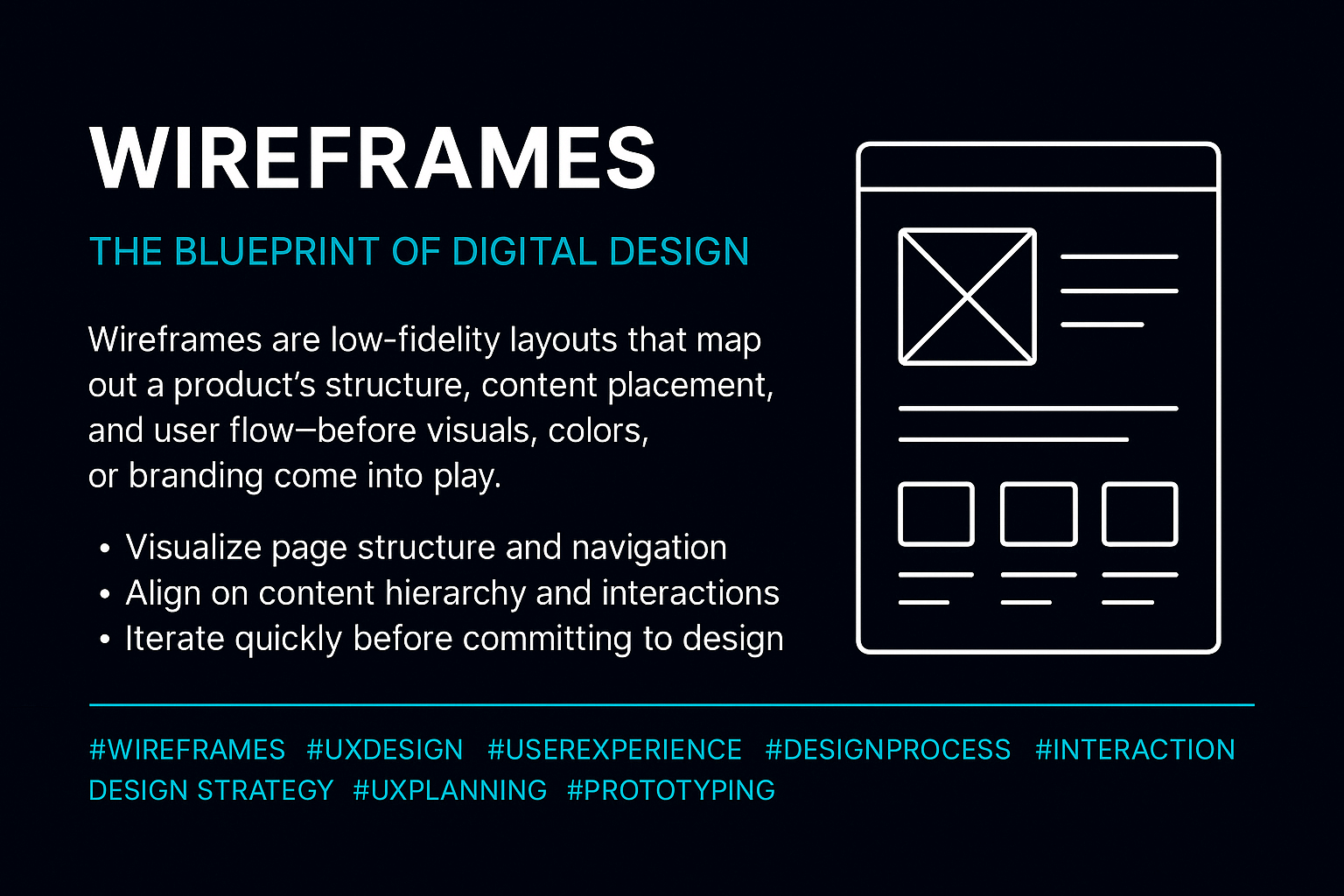
Wireframes are the blueprint of digital design. They’re low-fidelity layouts that map out a product’s structure, content placement, and user flow—before the visuals, colors, or branding come into play.

In UX, wireframes help teams:

- Visualize page structure and navigation
- Align on content hierarchy and interactions
- Iterate quickly before committing to design

Whether sketching by hand or using digital tools, wireframes keep the focus on function first, helping ensure the end experience is both usable and intuitive.

Design smarter from the ground up.

Read: https://www.uxglossary.com/terms/wireframes/ #wireframes

Wireframes Meaning & Definition of Terms | UX Glossary
Favicon 
www.uxglossary.com

Wireframes Meaning & Definition of Terms | UX Glossary

Wireframes are visual blueprints used in UX design to define the structure, layout, and functionality of digital products. Learn their benefits, use cases, and tools.

Customer Experience Management is about more than just customer service. It’s a strategy for designing and improving every interaction a customer has with your brand—across all channels and touchpoints.

When done right, CEM creates consistent, personalized, and meaningful experiences that drive satisfaction, loyalty, and advocacy. Because great experiences don’t just happen—they’re designed.

#customerexperience #cem #cxstrategy #uxdesign #userexperience #customerjourney #humancentereddesign #uxglossary

Read: https://uxaf.com/topic/what-is....-customer-experience

What is Customer Experience Management (CEM) and Why It Matters | UXAF
Favicon 
uxaf.com

What is Customer Experience Management (CEM) and Why It Matters | UXAF

Learn what Customer Experience Management (CEM) is, why it’s important, and how it helps brands create consistent, personalized, and satisfying customer journeys.

Customer Experience Management (CEM) is all about seeing your brand through the eyes of your customers—and optimizing every step of their journey.
It’s a strategic process of managing and improving all interactions a customer has with your brand—across every touchpoint, channel, and stage.
When done right, CEM creates:
✅ Consistent experiences
✅ Meaningful, personalized engagement
✅ Higher satisfaction, loyalty, and advocacy

Because great experiences don’t happen by chance—they’re designed.

#customerexperience #cem #cxstrategy #uxdesign #userexperience #customerjourney #humancentereddesign #uxglossary

Customer Experience Management (CEM) Meaning & Definition of Terms | UX Glossary
Favicon 
www.uxglossary.com

Customer Experience Management (CEM) Meaning & Definition of Terms | UX Glossary

Customer Experience Management (CEM) is a strategy for optimizing customer interactions across all touchpoints to improve satisfaction, loyalty, and business outcomes. Discover its benefits, methods, and examples.

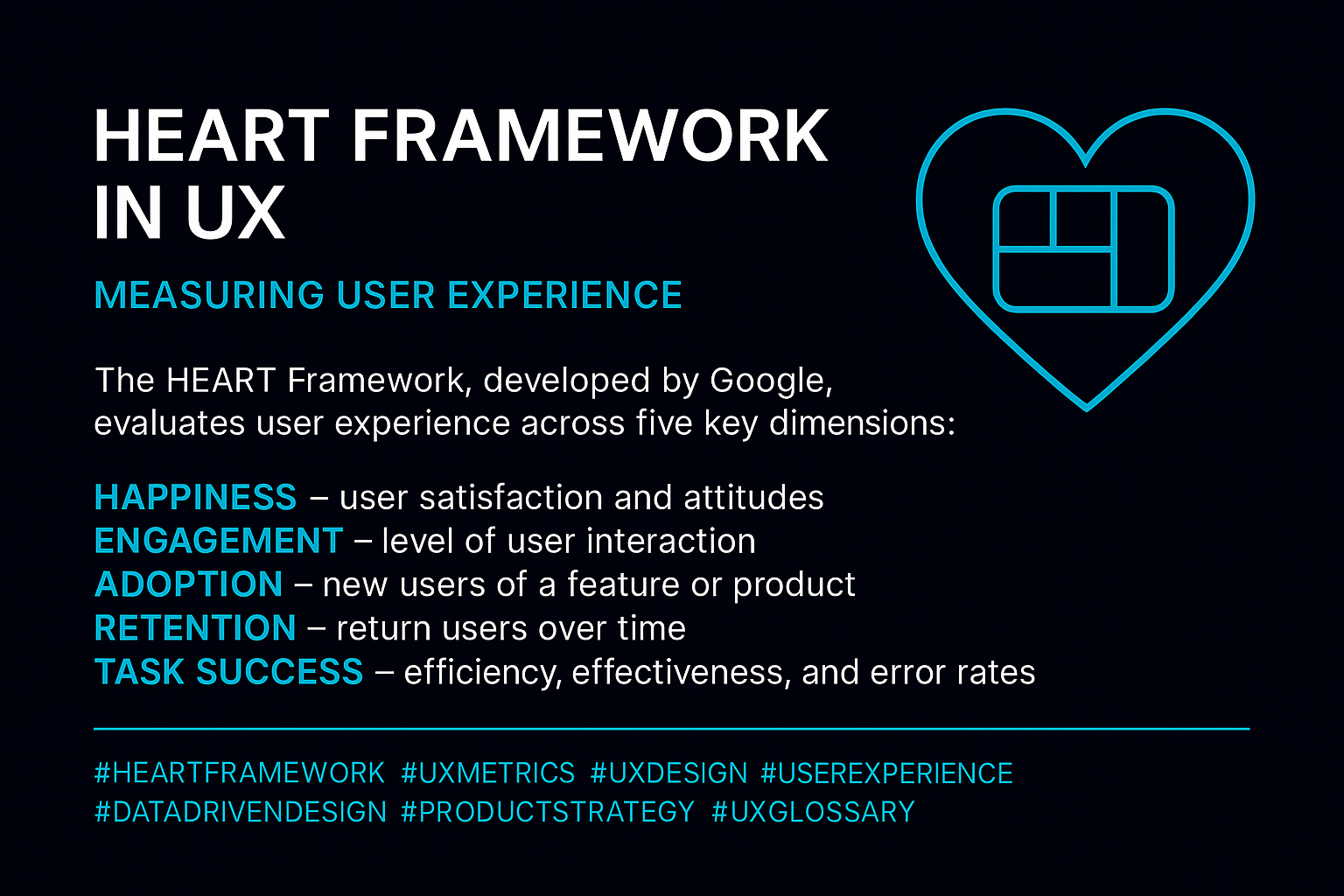
Developed by Google, the HEART Framework is a UX metrics model that helps teams track what really matters in user experience.

It breaks down experience into five key dimensions:
Happiness – user satisfaction and attitudes
Engagement – level of user interaction
Adoption – new users of a feature or product
Retention – return users over time
Task Success – efficiency, effectiveness, and error rates

By aligning product goals with these UX metrics, teams can make more informed, user-centered decisions—and build better experiences that scale.

Design with HEART.

Read: https://www.uxglossary.com/terms/heart-framework/ #uxglossary

HEART Framework Meaning & Definition of Terms | UX Glossary
Favicon 
www.uxglossary.com

HEART Framework Meaning & Definition of Terms | UX Glossary

The HEART Framework is a UX metrics model by Google that evaluates user experience across Happiness, Engagement, Adoption, Retention, and Task Success. Learn how to apply it for data-driven design decisions and product improvement.